Carbon Management

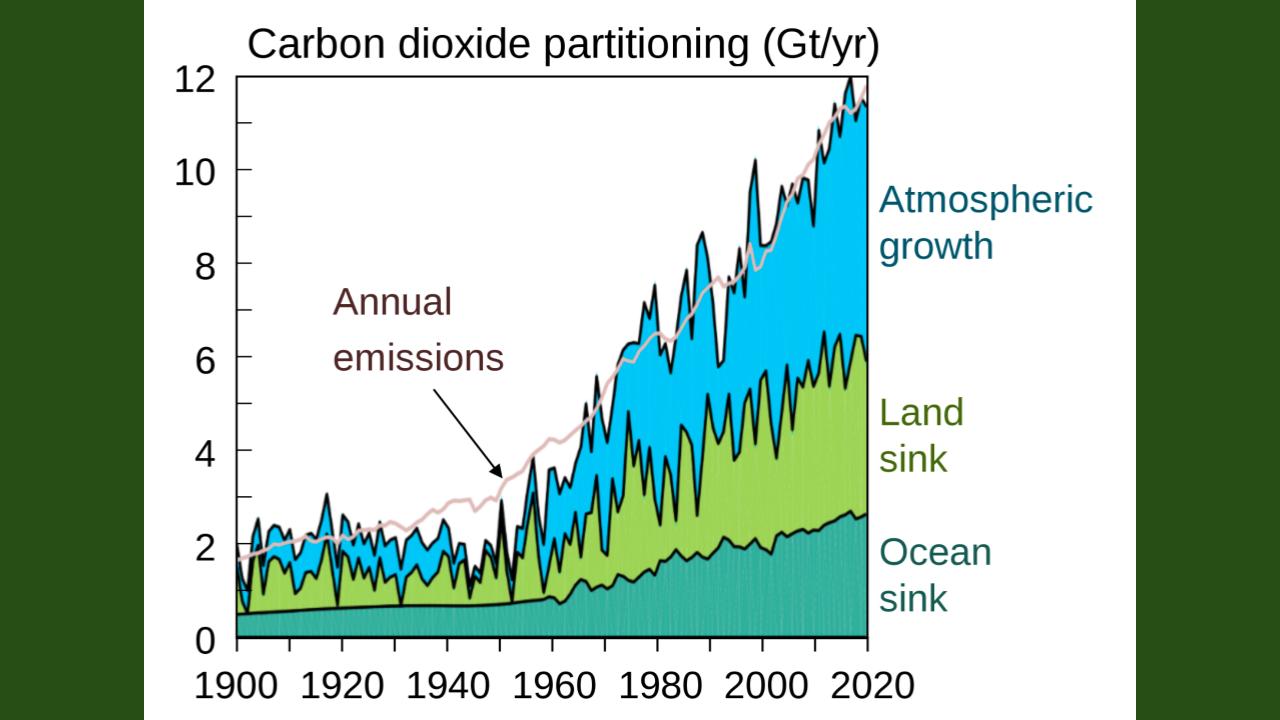
Climate change mitigation is action to limit climate change by reducing emissions of greenhouse gases or removing those gases from the atmosphere.  The recent rise in global average temperature is mostly caused by emissions from fossil fuels burning (coal, oil, and natural gas). Mitigation can reduce emissions by transitioning to sustainable energy sources, conserving energy, and increasing efficiency. In addition, carbon dioxide (CO2) can be removed from the atmosphere by enlarging forests, restoring wetlands and using other natural and technical processes, which are grouped together under the term of carbon sequestration.

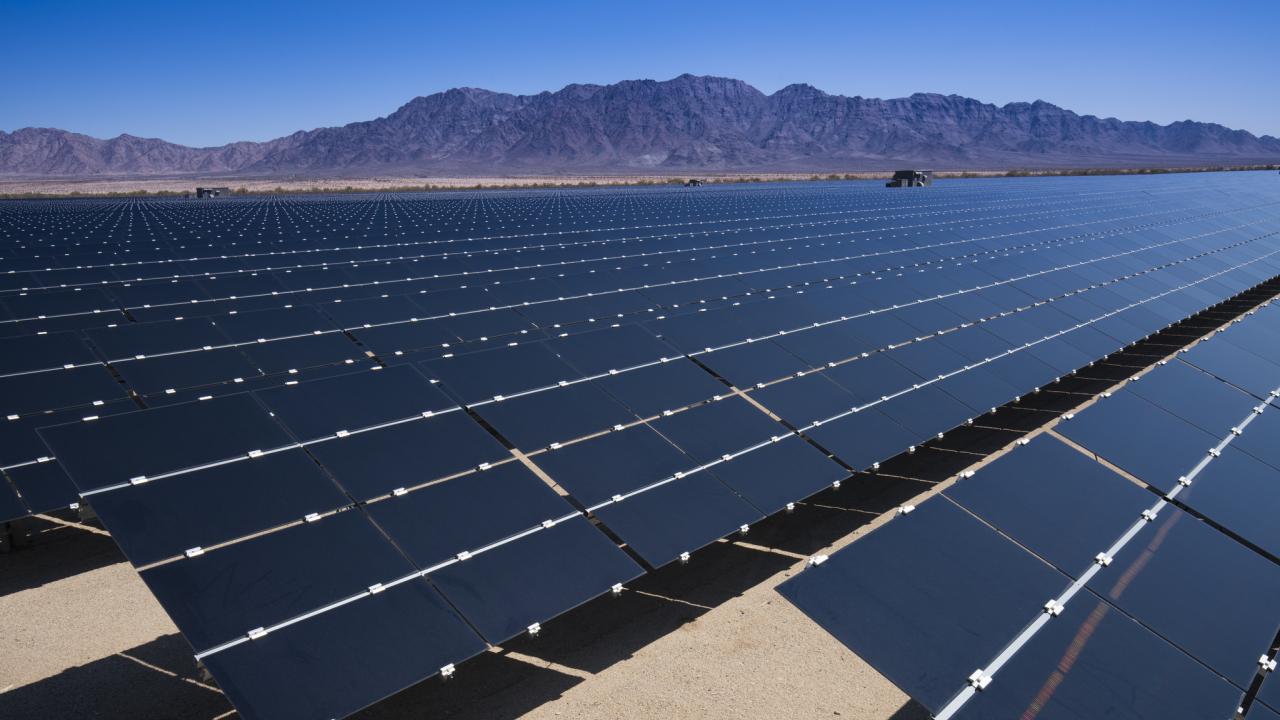
Solar energy and wind power have the highest climate change mitigation potential at lowest cost compared to a range of other options.  Variable availability of sunshine and wind is addressed by energy storage and improved electrical grids, including long-distance electricity transmission, demand management and diversification of renewables.  Emissions from infrastructure that directly burns fossil fuels, such as vehicles and heating appliances, can be reduced through electrifying the infrastructure so that it is powered by electricity rather than fuels. Energy efficiency is improved using heat pumps and electric vehicles. If industrial processes must create carbon dioxide, carbon capture and storage can reduce net emissions.

Greenhouse gas emissions from agriculture include methane as well as nitrous oxide. Emissions from agriculture can be mitigated by reducing food waste, switching to a more plant-based diet, by protecting ecosystems and by improving farming processes.

Climate change mitigation policies include: carbon pricing by carbon taxes and carbon emission trading, easing regulations for renewable energy deployment, reductions of fossil fuel subsidies, and divestment from fossil fuels, and subsidies for clean energy. Current policies are estimated to produce global warming of about 2.7 °C by 2100.[9] This warming is significantly above the 2015 Paris Agreement’s goal of limiting global warming to well below 2 °C and preferably to 1.5 °C. Globally, limiting warming to 2 °C may result in higher economic benefits than economic costs.

OnAir Post: Carbon Management
Policies & Politics

The politics of climate change results from different perspectives on how to respond to climate change. Global warming is driven largely by the emissions of greenhouse gases due to human economic activity, especially the burning of fossil fuels, certain industries like cement and steel production, and land use for agriculture and forestry. Since the Industrial Revolution, fossil fuels have provided the main source of energy for economic and technological development. The centrality of fossil fuels and other carbon-intensive industries has resulted in much resistance to climate friendly policy, despite widespread scientific consensus that such policy is necessary.

Climate change first emerged as a political issue in the 1970s. Efforts to mitigate climate change have been prominent on the international political agenda since the 1990s, and are also increasingly addressed at national and local level. Climate change is a complex global problem. Greenhouse gas (GHG) emissions contribute to global warming across the world, regardless of where the emissions originate. Yet the impact of global warming varies widely depending on how vulnerable a location or economy is to its effects. Global warming is on the whole having negative impact, which is predicted to worsen as heating increases. Ability to benefit from both fossil fuels and renewable energy sources vary substantially from nation to nation.

Different responsibilities, benefits and climate related threats faced by the world’s nations contributed to early climate change conferences producing little beyond general statements of intent to address the problem, and non-binding commitments from the developed countries to reduce emissions. In the 21st century, there has been increased attention to mechanisms like climate finance in order for vulnerable nations to adapt to climate change. In some nations and local jurisdictions, climate friendly policies have been adopted that go well beyond what was committed to at international level. Yet local reductions in GHG emission that such policies achieve will not slow global warming unless the overall volume of GHG emission declines across the planet.

Since entering the 2020s, the feasibility of replacing energy from fossil fuel with renewable energy sources significantly increased, with some countries now generating almost all their electricity from renewables. Public awareness of the climate change threat has risen, in larger part due to social movement led by youth and visibility of the impacts of climate change, such as extreme weather events and flooding caused by sea level rise. Many surveys show a growing proportion of voters support tackling climate change as a high priority, making it easier for politicians to commit to policies that include climate action. The COVID-19 pandemic and economic recession lead to widespread calls for a “green recovery”, with some political contexts like the European Union successfully integrating climate action into policy change. Outright climate change denial had become a much less influential force by 2019, where opposition has pivoted to strategies of encouraging delay or inaction.

OnAir Post: Policies & Politics

Adaptation

Adaptation is “the process of adjustment to current or expected changes in climate and its effects”.  Without additional mitigation, adaptation cannot avert the risk of “severe, widespread and irreversible” impacts. More severe climate change requires more transformative adaptation, which can be prohibitively expensive. The capacity and potential for humans to adapt is unevenly distributed across different regions and populations, and developing countries generally have less. The first two decades of the 21st century saw an increase in adaptive capacity in most low- and middle-income countries with improved access to basic sanitation and electricity, but progress is slow. Many countries have implemented adaptation policies. However, there is a considerable gap between necessary and available finance.

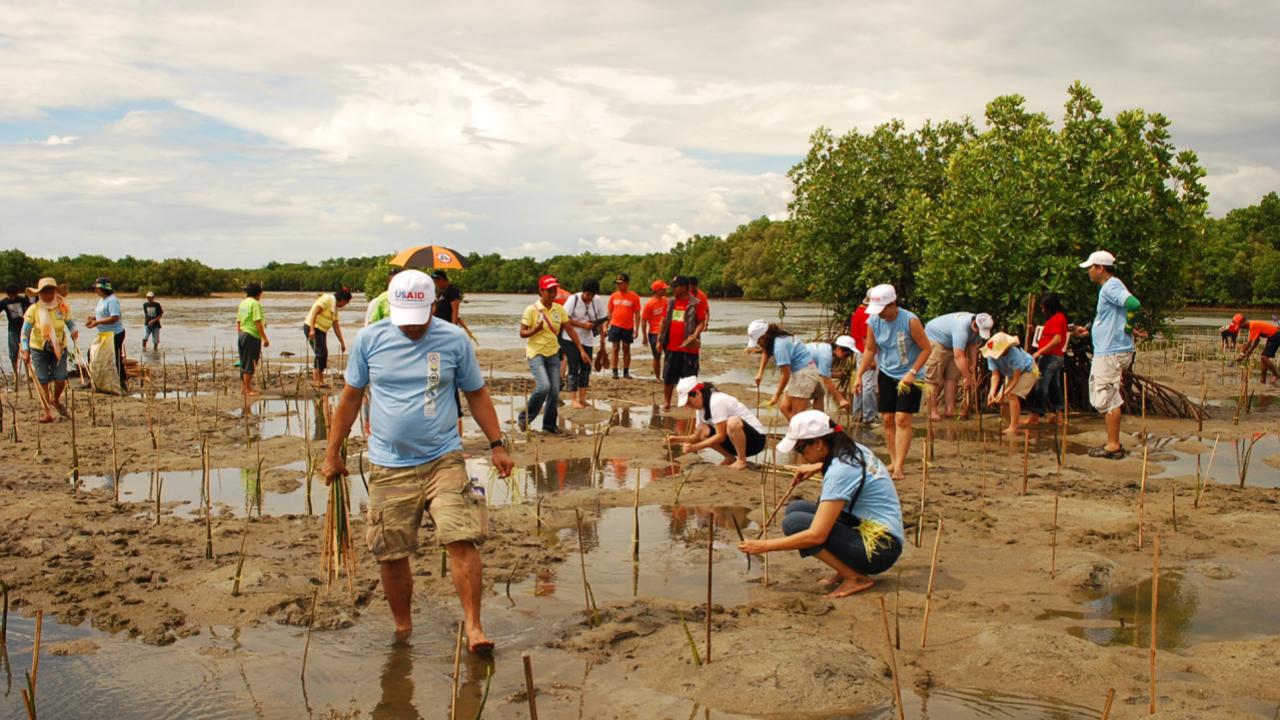
Adaptation to sea level rise consists of avoiding at-risk areas, learning to live with increased flooding and protection. If that fails, managed retreat may be needed. There are economic barriers for tackling dangerous heat impact. Avoiding strenuous work or having air conditioning is not possible for everybody. In agriculture, adaptation options include a switch to more sustainable diets, diversification, erosion control and genetic improvements for increased tolerance to a changing climate. Insurance allows for risk-sharing, but is often difficult to get for people on lower incomes. Education, migration and early warning systems can reduce climate vulnerability. Planting mangroves or encouraging other coastal vegetation can buffer storms.

OnAir Post: Adaptation

Alternative Energy Sources

Renewable energy is energy from renewable resources that are naturally replenished on a human timescale. Renewable resources include sunlight, wind, the movement of water, and geothermal heat.  Although most renewable energy sources are sustainable, some are not. For example, some biomass sources are considered unsustainable at current rates of exploitation. Renewable energy is often used for electricity generation, heating and cooling. Renewable energy projects are typically large-scale, but they are also suited to rural and remote areas and developing countries, where energy is often crucial in human development.  Renewable energy is often deployed together with further electrification, which has several benefits: electricity can move heat or objects efficiently, and is clean at the point of consumption.

From 2011 to 2021, renewable energy has grown from 20% to 28% of global electricity supply. Use of fossil energy shrank from 68% to 62%, and nuclear from 12% to 10%. The share of hydropower decreased from 16% to 15% while power from sun and wind increased from 2% to 10%. Biomass and geothermal energy grew from 2% to 3%. There are 3,146 gigawatts installed in 135 countries, while 156 countries have laws regulating the renewable energy sector.[10] [11] In 2021, China accounted for almost half of the global increase in renewable electricity.

OnAir Post: Alternative Energy Sources

Climate Models

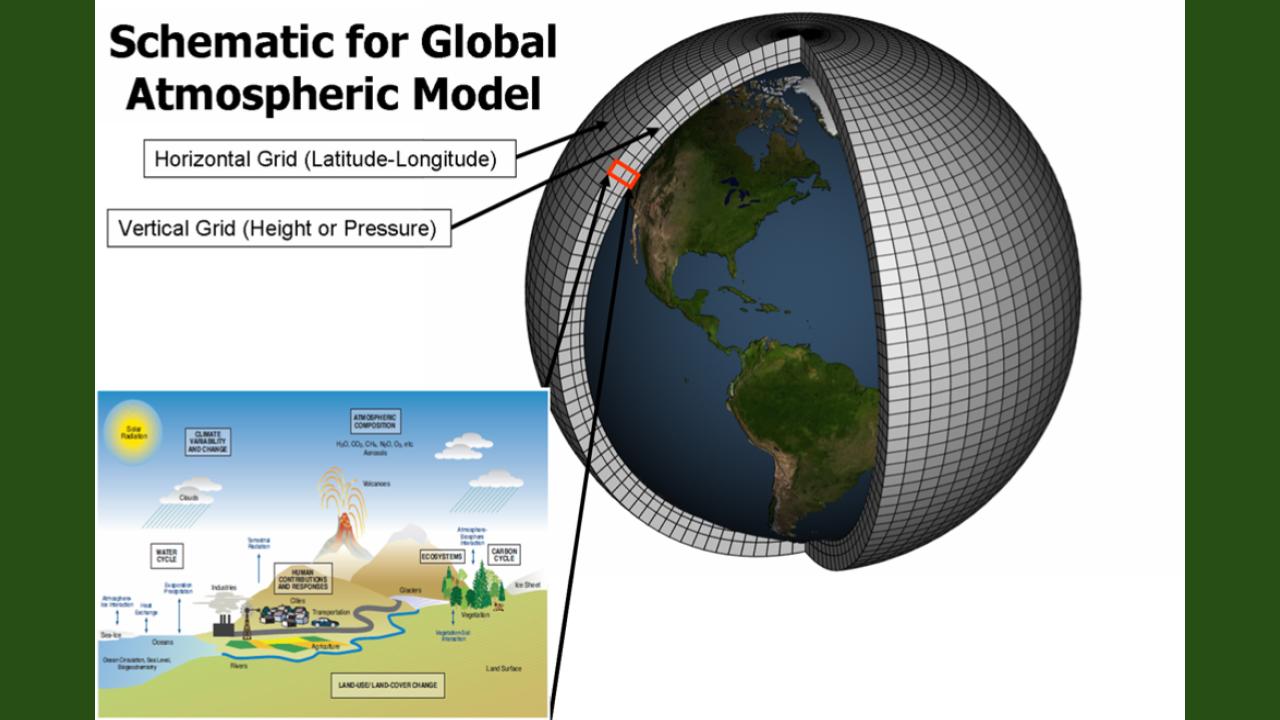
Numerical climate models use quantitative methods to simulate the interactions of the important drivers of climate, including atmosphere, oceans, land surface and ice. They are used for a variety of purposes from study of the dynamics of the climate system to projections of future climate. Climate models may also be qualitative (i.e. not numerical) models and also narratives, largely descriptive, of possible futures.

Quantitative climate models take account of incoming energy from the sun as short wave electromagnetic radiation, chiefly visible and short-wave (near) infrared, as well as outgoing long wave (far) infrared electromagnetic. An imbalance results in a change in temperature.

Quantitative models vary in complexity. For example, a simple radiant heat transfer model treats the earth as a single point and averages outgoing energy. This can be expanded vertically (radiative-convective models) and/or horizontally. Coupled atmosphere–ocean–sea ice global climate models solve the full equations for mass and energy transfer and radiant exchange. In addition, other types of modelling can be interlinked, such as land use, in Earth System Models, allowing researchers to predict the interaction between climate and ecosystems.

OnAir Post: Climate Models

Center for Climate Change Communication

The Center for Climate Change Communication (Mason 4C) develops and applies social science insights to help society make informed decisions that will stabilize the earth’s life-sustaining climate, and prevent further harm from climate change.

As a result of human activity – primarily the burning of fossil fuels – the earth’s climate is becoming dangerously disrupted and destabilized. Our mission is to develop and apply social science insights to help society make informed decisions that will stabilize the earth’s life-sustaining climate, and prevent further harm from climate change. To achieve this goal, our center engages in three broad activities: we conduct unbiased communication research; we help government agencies, civic organizations, professional associations, and companies apply social science research to improve their public engagement initiatives; and we train students and professionals with the knowledge and skills necessary to improve public engagement with climate change.

OnAir Post: Mason 4C – Center for Climate Change Communication

Climate Change Network

The Climate Change onAir network of hubs is focused on bringing together information, experts, organizations, policy makers, and the public to address Climate Change challenges.

If you or your organization would like to curate a post within this hub (e.g. a profile post on your organization), contact climate@onair.cc.

The Earth’s climate has been much hotter and colder than it is today. Climate change this century and last century is sometimes called global warming, because the average temperature on the surface has risen. The last decade (2011-2020) was the warmest on record, and each of the last four decades has been warmer than any previous decade since 1850. The climate is now changing much faster than it has in the recent past. This is because people are putting more greenhouse gases in Earth’s atmosphere, and they block some heat from escaping from the Earth into space.  Wikipedia

To view this post in full screen mode, click anywhere on the Feature Image.

OnAir Post: Climate Change Network

Climate Communication Hub

This Climate Communication Hub is focused on bringing together information, experts, organizations, policy makers, and the public to address climate communication challenges..

If you or your organization would like to curate a post within this hub (e.g. a profile post on your organization), contact climate@onair.cc.

Environmental communication is “the dissemination of information and the implementation of communication practices that are related to the environment. In the beginning, environmental communication was a narrow area of communication; however, nowadays, it is a broad field that includes research and practices regarding how different actors (e.g., institutions, states, people) interact with regard to topics related to the environment and how cultural products influence society toward environmental issues”.

Environmental communication also includes human interactions with the environment. This includes a wide range of possible interactions, from interpersonal communication and virtual communities to participatory decision-making and environmental media coverage. From the perspective of practice, Alexander Flor defines environmental communication as the application of communication approaches, principles, strategies, and techniques to environmental management and protection


OnAir Post: Climate Communication Hub

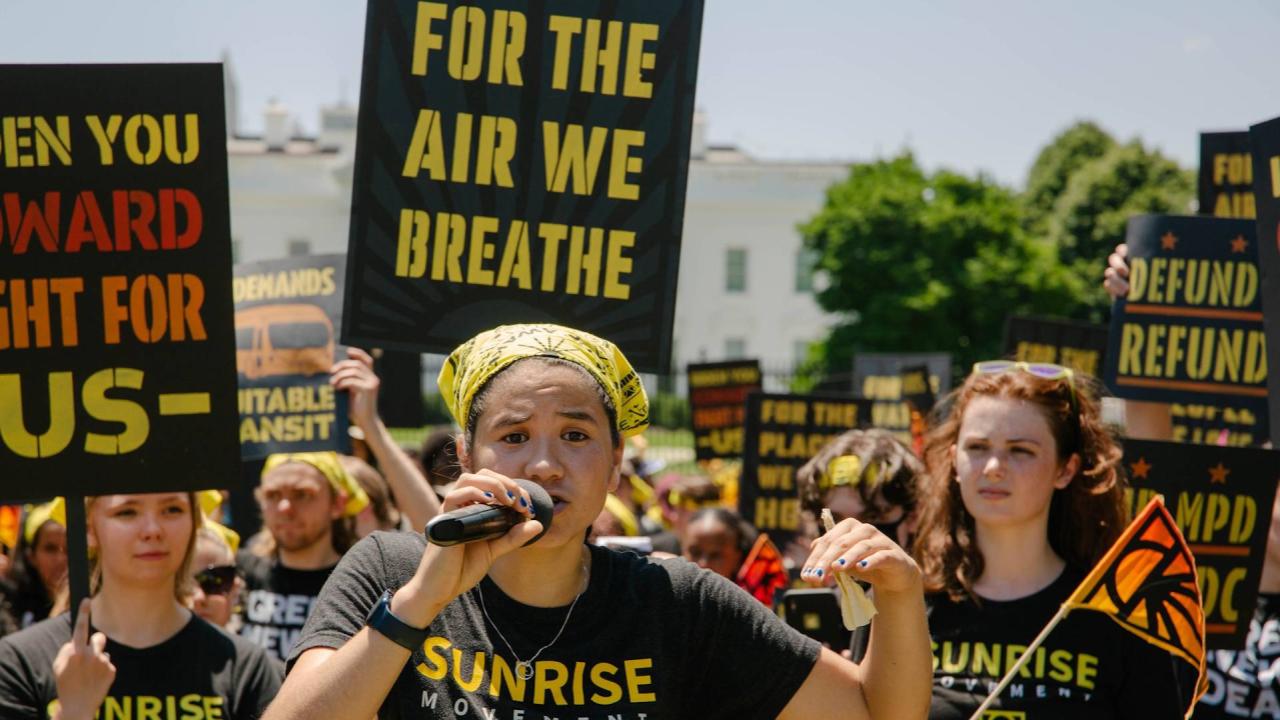
Sunrise Movement

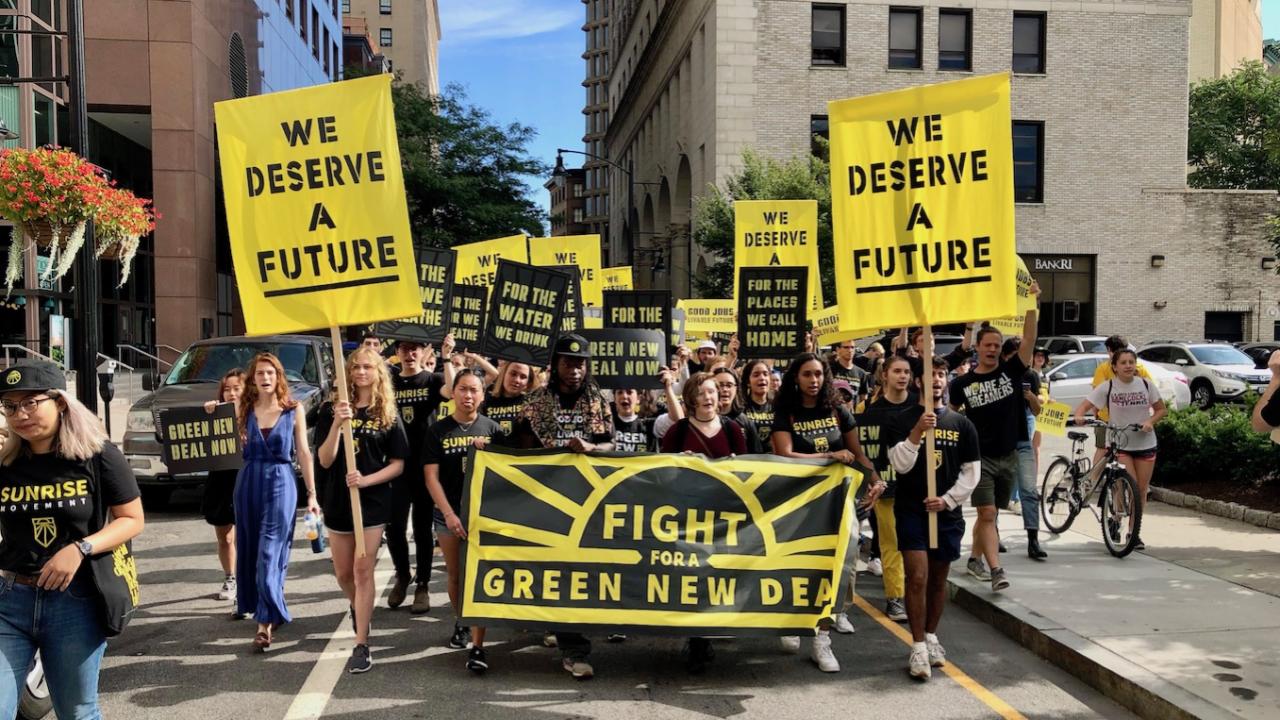
Sunrise Movement is an American 501(c)(4) political action organization that advocates political action on climate change. When launched in 2017, the movement’s goal was to elect proponents of renewable energy in the 2018 midterm elections, first in the Democratic primaries and then in the general election held on November 6, 2018. Since the midterm elections, the movement has been working towards shifting the Overton window on climate policy to center the environmental program known as the Green New Deal.

Together with Justice Democrats and Alexandria Ocasio-Cortez, the group organized a sit-in in the office of Speaker of the House Nancy Pelosi, which brought Sunrise its first significant press coverage. Sunrise organized a similar event in February 2019, bringing a group of young people to confront Senator Dianne Feinstein in her office.

Since the sit-in, the movement has been attracting media attention with their direct actions, such as the Wide Awake series of actions in the summer of 2020.

OnAir Post: Sunrise Movement

National Academic of Medicine

Climate change represents one of the most significant threats to human health in the 21st century. The Grand Challenge on Climate Change, Human Health, and Equity (Climate Grand Challenge) is a multi-year global initiative to improve and protect human health, well-being, and equity by working to transform systems that both contribute to and are impacted by climate change.

The Climate Grand Challenge has four strategic objectives:

Communicate the climate crisis as a public health and equity crisis

Develop a roadmap for systems transformation

Catalyze the health sector to reduce its climate footprint and ensure its resilience

Accelerate research and innovation at the intersection of climate, health, and equity

OnAir Post: National Academic of Medicine

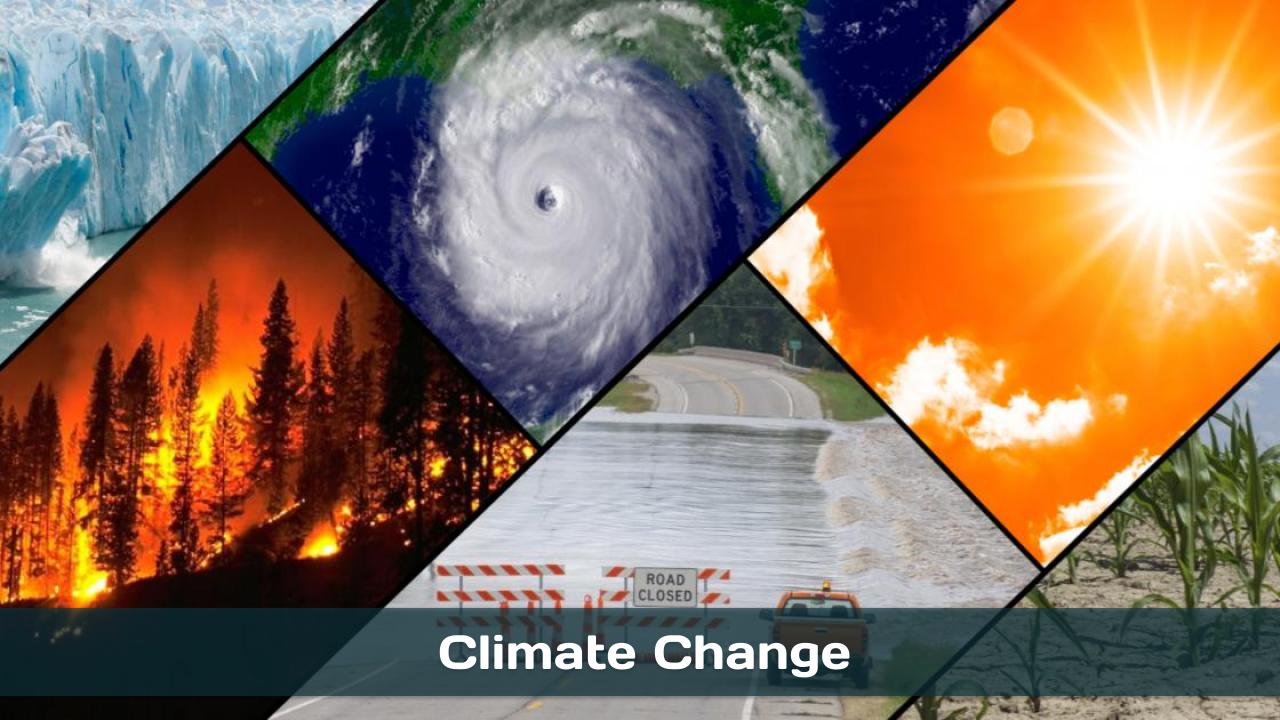
Climate Change

In common usage, Climate Change describes global warming—the ongoing increase in global average temperature—and its effects on Earth’s climate system. Climate change in a broader sense also includes previous long-term changes to Earth’s climate. The current rise in global average temperature is more rapid than previous changes, and is primarily caused by humans burning fossil fuels.

  • In the ‘About’ section of this post is an overview of the issues or challenges, potential solutions, and web links. Other sections have information on relevant legislation, committees, agencies, programs in addition to information on the judiciary, nonpartisan & partisan organizations, and a wikipedia entry.
  • To participate in ongoing forums, ask the post’s curators questions, and make suggestions, scroll to the ‘Discuss’ section at the bottom of each post or select the “comment” icon.

The Climate Change category has related posts on government agencies and departments and  committees and their Chairs.

OnAir Post: Climate Change

Skip to toolbar